
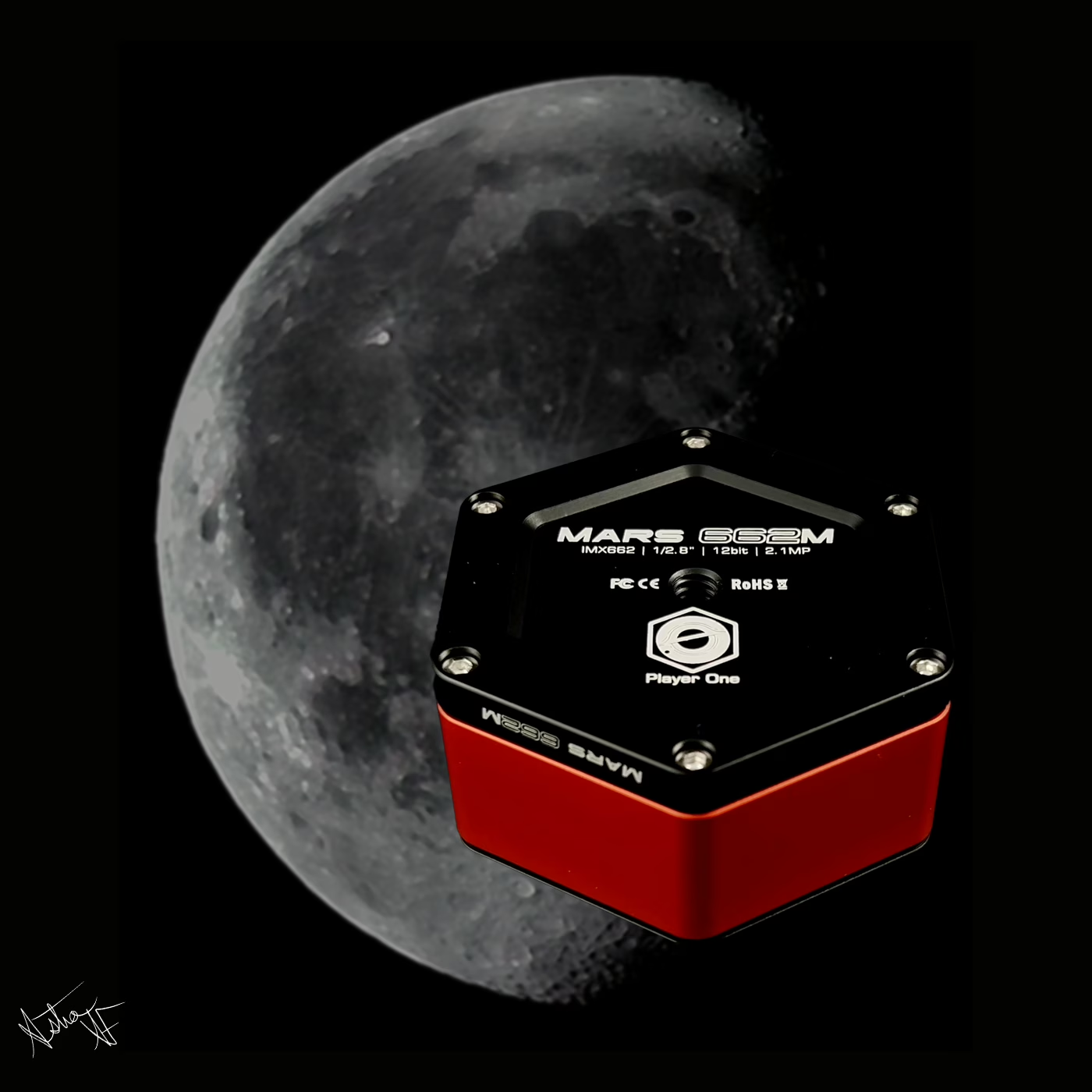
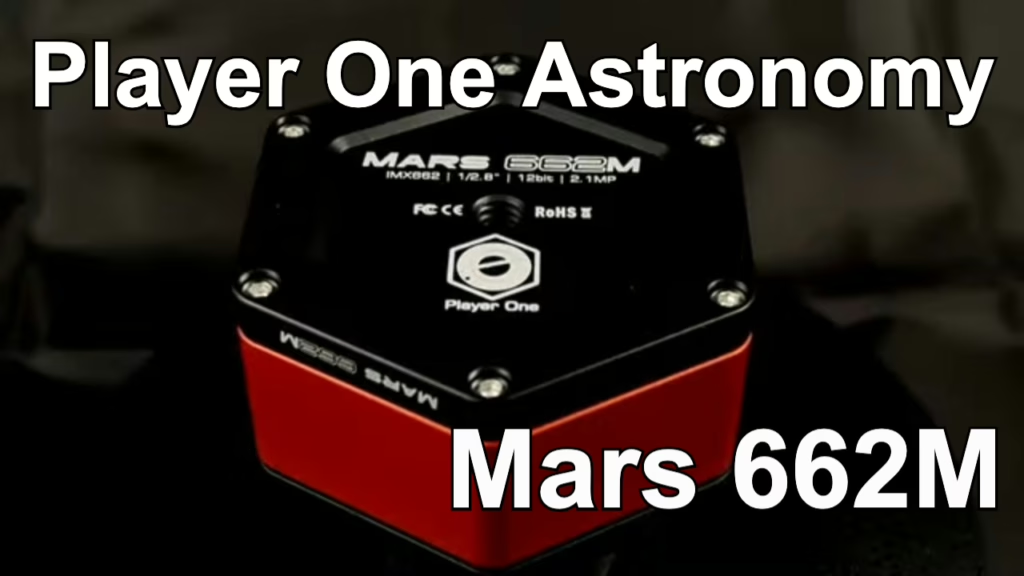
In one of my latest videos, I covered an introduction to the features and capabilities of the Player One Mars 662M, a monochrome planetary camera that’s been making waves in the astrophotography community. This post summarizes the key insights and experiences shared in the video, in addition to my field experience, providing a comprehensive overview for enthusiasts looking to enhance their planetary imaging setup.
Equipment Overview
For this session, I paired the Mars 662M with my Celestron EdgeHD 8″ SCT, utilizing my custom-built HyperAF f/1.9 system, operating at a focal length of 379mm. The camera’s compact design and high sensitivity make it an excellent match for capturing detailed planetary and lunar images.
Setup and Configuration
The setup process was straightforward:
- Camera Connection: The Mars 662M was connected directly to the telescope via my custom HyperAF f/1.9 system, ensuring a secure and straightforward setup.
- Software Integration: I used SharpCap for image acquisition, which seamlessly recognized the Mars 662M ASCOM driver. The software’s intuitive interface allowed me to adjust gain, exposure, and ROI settings efficiently.
Imaging Session Highlights
In this hands-on field test, I paired the Player One Mars 662M (IMX662 mono) with my custom HyperAF f/1.9 system at 379mm focal length for a sunrise lunar imaging session. Despite challenging low-angle lighting and atmospheric haze, the camera excelled—capturing high-frame-rate video with clean shadows, subtle surface contrast, and crisp fine details. I processed the resulting data using AstroSurface for alignment and wavelet sharpening, then applied final tonal work in Photoshop. This session demonstrates just how capable the Mars 662M is for real-world planetary and lunar imaging—even at dawn.
Post-Processing Workflow
- Post-capture, I processed the lunar data using:
- AstroSurface for stacking, alignment, and wavelet sharpening to enhance fine surface structure.
- Photoshop for final tonal adjustments, noise reduction, and detail enhancement using Camera Raw and curve layers.
- This combination preserved sharp detail while allowing for creative tonal control and final presentation quality.
What Makes the IMX662 Special?
One standout feature of the Mars 662M is the Sony IMX662 sensor itself. Designed for low-light and high-contrast scenarios, this sensor delivers excellent sensitivity with minimal noise—perfect for fast planetary capture and subtle lunar detail. Its global shutter-like behavior at short exposures helps avoid warping on fast-moving objects, and its 2.9µm pixel size pairs well with moderate focal lengths like mine. For those upgrading from older planetary cams, the IMX662 brings a noticeable bump in contrast and clarity, especially under less-than-ideal sky conditions.
Why I Chose the Mars 662M
I picked up the Mars 662M not just for its specs, but because I wanted a reliable, compact mono cam I could throw into a lightweight grab-and-go setup. The Mars 662M gives me a level of detail and flexibility that’s hard to beat. Whether I’m imaging the Moon at sunrise or working on a planetary target, this camera has earned its place in my kit. It’s fast, sharp, and consistently delivers results I’m excited to process.
Final Thoughts
The Player One Mars 662M exceeded expectations, offering a seamless integration into my existing setup and delivering high-quality lunar images. Its performance, combined with user-friendly software compatibility, makes it a valuable addition for any astrophotographer aiming to elevate their planetary imaging game.
Leave a Reply